Kimball 4-H Club Constructing Bee Hotels
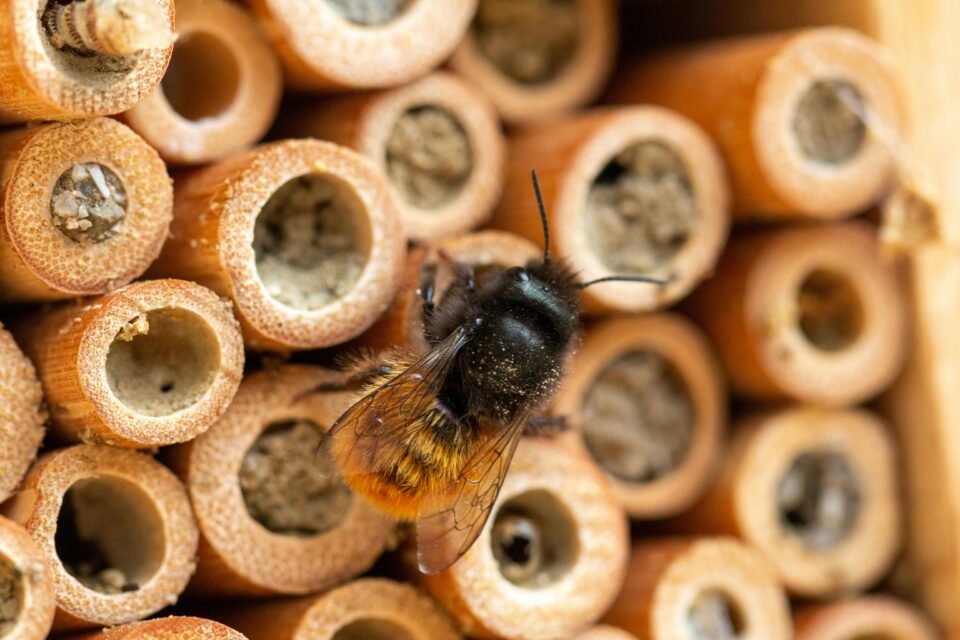
With spring finally arriving in Minnesota, pollinators will be hard at work to produce the colorful flowers and plants we see during the coming summer season. One of the most important native pollinators is the solitary bee, making up 70% of Minnesota’s bee population out of a total of 500 native species.
As the name implies, solitary bees prefer to live alone instead of in a traditional hive. The female bees collect pollen, build nests, and lay eggs all by themselves. Their work in pollination helps produce most of the food we consume every day, such as fruits, vegetables, and even nuts. Unfortunately, these insects are rapidly declining in numbers due to loss of habitat and environmental changes.
To spread awareness of this issue, Kimball Kruisers 4-H Club member, Maisy G., has been organizing events and activities in her community throughout the past few years. This year, she led the Kimball Kruisers Community Pride project that focuses on solitary bees and their roles in our environment. Maisy led the club in making 3 bee ‘hotels,’ which consist of wooden structures for the insects to live in.
Club members worked together to paint the houses with bright colors to attract bees and brought supplies like sticks, paper straws, pinecones, wool, reeds, and other natural products to fill the hotels. These items provide places for solitary bees to build nests and lay eggs. The hotels do not include any food for the insects and simply allow bees already existing in the environment to thrive.
On May 2nd, the Kimball Kruisers 4-H Club meeting took place at the Kimball Public Library. Members placed one of their bee hotels at the local library to support solitary bees and other insects within their own community. To help teach more people about the project, Maisy also made a poster board with educational resources and facts that can be found inside the library.
The other two hotels can be found at Anderson Gardens in Litchfield and Hilltop Care Center in Watkins. Maisy says she hopes this project teaches people that bees do not have to be scary and they actually play an essential role in our ecosystem. This Community Pride project was an excellent way for 4-H’ers to learn about pollinators and to make an impact directly in their community.